Walk-away rules
Sellers behind the listings: credit, red flags, and when to close the tab
A listing is a seller wearing a product photo. This page covers the one seller signal the operator itself endorses, the red flags that end a submit, and the cautions that save a parcel three weeks later.
Credit history is the seller signal written into policy
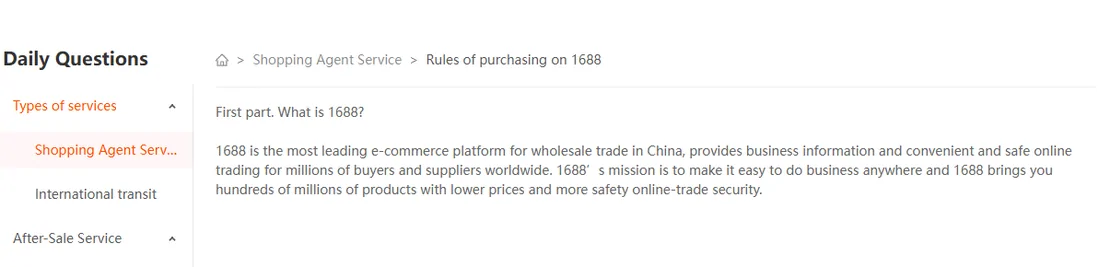
The rules of purchasing on 1688 (help id 90, read 2026-10-10) open by explaining the platform, then get specific: choose sellers with good credit, because credit is what secures your exchange and return rights on a wholesale order. That is the only seller-selection advice the operator publishes as policy, which makes it the one worth taking literally.
On marketplace listings the equivalent read is the shop page: its rating, its age, how it answers disputes. The decision helper asks for credit as a field precisely because the policy treats it as load-bearing. One sentence covers wholesale quantity floors: an order below the seller minimum is not valid as filed, per the same article.
The red-flag dossier: four patterns, four written sources
Box counts, not piece counts
Wholesale shipments are checked by number of boxes; the warehouse does not guarantee pieces per box (help id 90). A listing priced per carton is carrying this term whether it mentions it or not.
Gallery contradicts the option tiles
When variant photos and option tiles disagree, the wrong-variant filing becomes a wrong parcel, and the undo after Mailed depends on the seller (help id 87). Close the tab or ask first.
Label text that works around the rules
Listings must be authentic goods; suspect listings are removed and orders can be declined or disposed of (anti-counterfeiting policy, help id 125). Label wording that winks at that policy is a seller telling you how the order ends.
Fill and Buy with no net
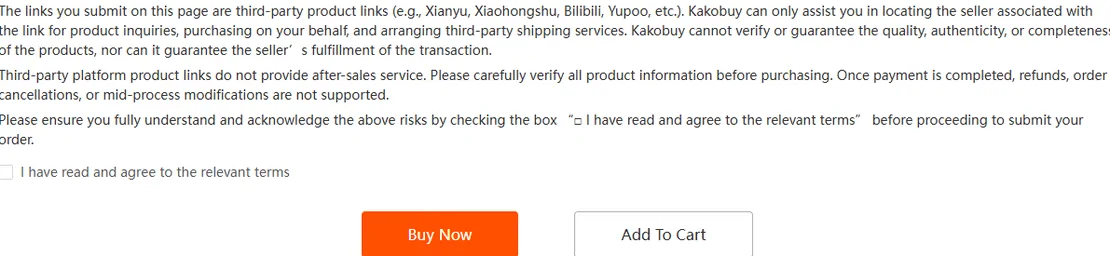
Third-party links filed through Fill and Buy carry no quality guarantee, no after-sales and no cancellation once payment completes (form terms, read 2026-10-10). Fine for the thing only that form can reach; a red flag when the same item exists on a crawled platform.
Resolve the manual-order questions before payment
For a link that needs Fill and Buy, prepare the original URL, a clear product name and image, exact specification, quantity, unit price, domestic freight and seller identity. If the page offers several configurations, ask which selected option the quote covers. A low displayed starting price is not a complete buying instruction.
The third-party-link terms shown below make this a consequential choice: they describe restrictions on after-sales, cancellation and changes after payment. Read the terms for the actual link before proceeding. Manual entry helps transmit information; it does not supply missing seller commitments or broaden QC into authentication.
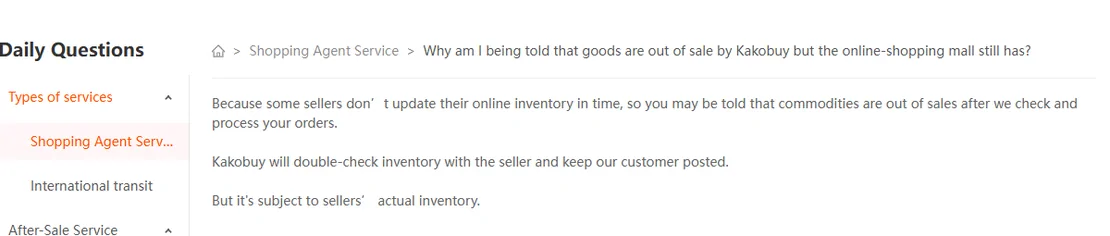
When a seller gives conflicting answers about size, included pieces or availability, save the conversation and resolve the discrepancy before filing the purchase. A clear alternative listing may be easier to manage than an incomplete order followed by a dispute.
Picking the right item before you pick the fight
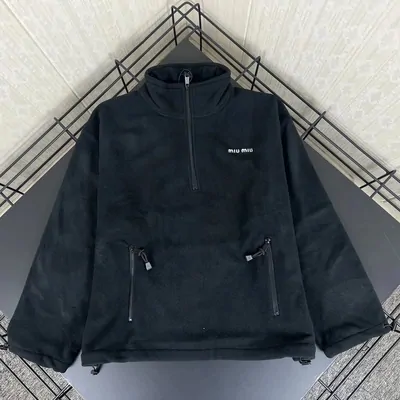
Work the card in order: read the label line as metadata, open the gallery against the option tiles, count what the price actually buys, then look at the size run. A half-zip fleece listed at CN¥901 is a different purchase if the card covers one jacket or a two-colour bundle, and the only place that is written is the options themselves.
Then inspect the seller’s other listings and recent item-specific feedback. A focused catalogue can make a technical question easier to frame, but shop size or variety does not establish response speed. Judge the actual answer and terms for your order.
The label anatomy page handles the reading; this page is about what you do when the reading goes badly.
Judging a finds catalogue, this one included
What makes a trustworthy spreadsheet is the same list everywhere: its claims carry dates, its links resolve to live listings instead of dead ones, someone signs it, and a review date moves. A necklace card that has outlived its listing is the fastest tell; catalogues rot from the links outward.
Apply that test here too. Every page on this site footers its review date, outbound links get retired at review, and the about page names a contact for corrections. A catalogue that will not survive its own checklist is a red flag wearing a bookmark icon.

Declaration names and the cautions that outlive trends
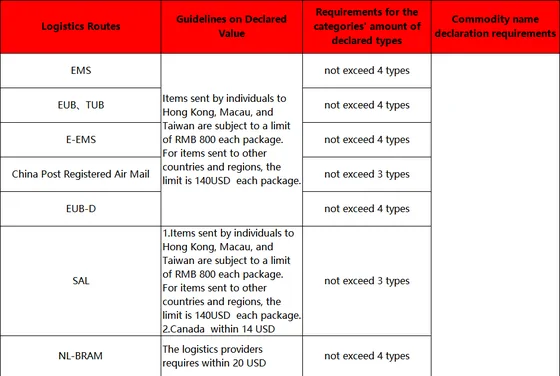
Customs declarations cannot use catch-all commodity names: the operator’s declaration guidance bans ten generic words including sample, gift, personal effect, cloth, seed, model, plastic, goods and accessory. The table carrying that rule was published in July 2022 and has not been updated since, so treat its route names and amounts as historical; the naming rule itself is the durable part.
Two more cautions from the consolidation rules (help id 21): parcels over 10 kg read as commercial to customs, and so does one parcel stuffed with many identical items, which is sometimes a reason to split a shipment even when one box is cheaper.
Current tax thresholds are a moving target; the EU’s flat 3 euro category line (announced 2026-06-23) is covered with the other dated notices.
The walk-away summary
Close the tab on: below-minimum wholesale orders, galleries that contradict their tiles, labels that market around the authenticity rules, and Fill and Buy filings for items a crawled platform also carries. Everything else is a reading problem, and the helper exists so the reading takes two minutes, not twenty.